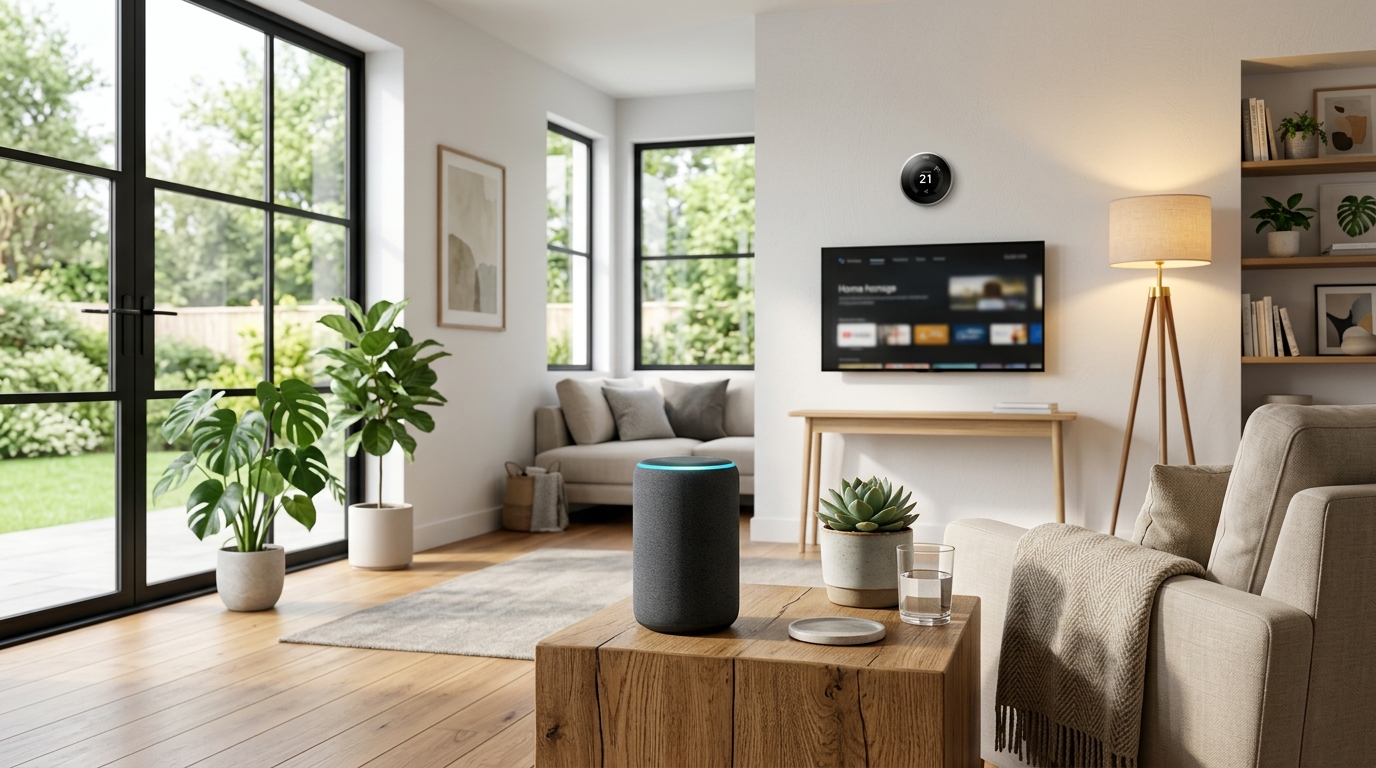
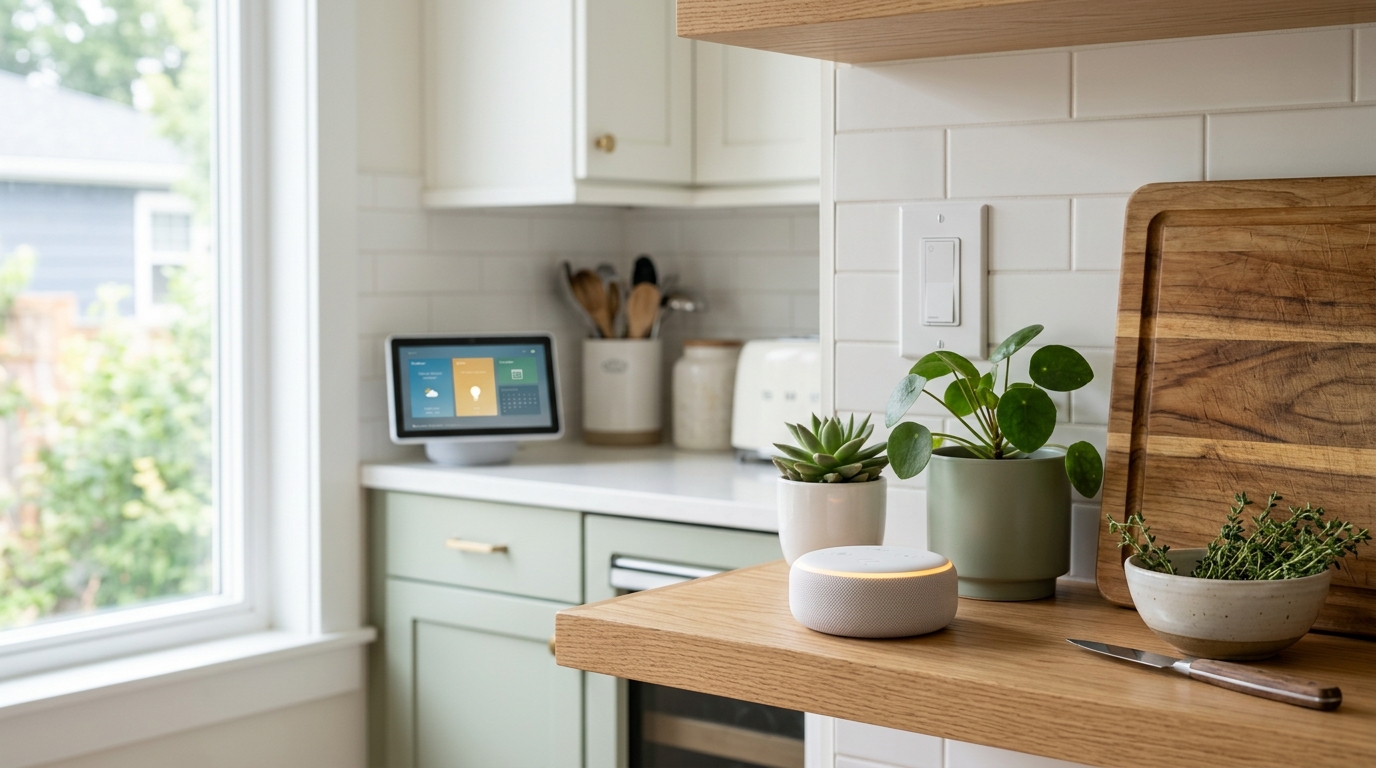
I’ve been running a local voice setup for a while now, mostly out of stubbornness about not wanting Amazon or Google listening to my living room. The trade-off was always speed — you’d say a command and then wait an awkward second or two while it processed locally. That lag just got fixed, and it’s a bigger deal than it sounds.
The Update That Actually Matters This Month
Home Assistant’s latest release tackled the exact thing that made local, privacy-first voice control feel clunky compared to Alexa or Google. Both Piper, their local text-to-speech engine, and Home Assistant Cloud TTS can now start generating audio as soon as the AI produces the first few words of a response, instead of waiting for the whole sentence to finish — and that change alone improved response speed by a factor of ten.
If you’ve never used a local voice assistant, that number might not mean much. If you have, you know exactly what it fixes: the dead air after you finish talking, where you’re not sure if the thing heard you or just… didn’t.
MCP Is the Bigger Story Underneath the Speed Boost
The speed improvement is the headline, but the more interesting shift is what’s powering it. Home Assistant has built in support for MCP — the same protocol increasingly used to connect AI models to external tools and data — which opens up a much wider range of what a local voice assistant can actually do beyond flipping switches and adjusting thermostats.
Combined with their AI Tasks feature actually completing multi-step requests rather than just executing single commands, the gap between “smart speaker that understands commands” and “assistant that understands what you’re trying to accomplish” is closing fast, even on hardware you fully control.
The Case for Going Local Is Getting Stronger
If you’ve been eyeing a self-hosted setup but assumed it meant tolerating a worse experience for the sake of privacy, that trade-off is shrinking. One detailed testing guide going around this year recommends starting with a fully local stack — Whisper for speech-to-text, Home Assistant’s built-in intent system, and Piper for the response — no LLM required, covering the vast majority of everyday smart home commands. Hardware-wise, that’s realistic on something as modest as a Raspberry Pi 4 paired with a cheap ESP32 satellite device, not a $2,000 GPU rig, which is the misconception that’s kept a lot of people away from trying it.
The honest prediction from people deep in this space: within about a year, a typical local Home Assistant voice setup should match Alexa or Google Assistant for the core stuff — lights, climate, locks, routines. Where it won’t compete is shopping and music discovery, which lean heavily on commercial catalogs and recommendation engines that a local system just doesn’t have access to.
Meanwhile, the Mainstream Assistants Aren’t Standing Still
None of this makes Alexa, Google, or Apple irrelevant — if anything, the mainstream players are leaning further into context-aware automation too. Systems built around all three are increasingly able to interpret intent rather than rigid phrasing, so something like “it’s cold in here” gets processed and translated into an actual temperature adjustment without a specific command format. And the ecosystem choice still mostly comes down to what you already own: Alexa for the widest third-party device support, Google for anyone already living in Android and Nest, Apple for households prioritizing tight privacy and integration over sheer catalog size.
Plenty of people are landing on mixed setups too — Google for calendar and search, Alexa for device-heavy automations — accepting a bit of app-juggling in exchange for using whichever assistant is genuinely better at each specific job.
Should You Actually Switch to Local?
Not unless privacy is a real priority for you, or you’re already frustrated with ads and unwanted AI features creeping into a commercial assistant you didn’t ask to have. If your Alexa or Google setup is working fine and you don’t mind the cloud dependence, there’s no urgency here. But if you’ve been holding off because you assumed local meant slow and limited, that assumption is a lot less true than it was even six months ago — and a $13 satellite device is a pretty low-stakes way to find out for yourself.