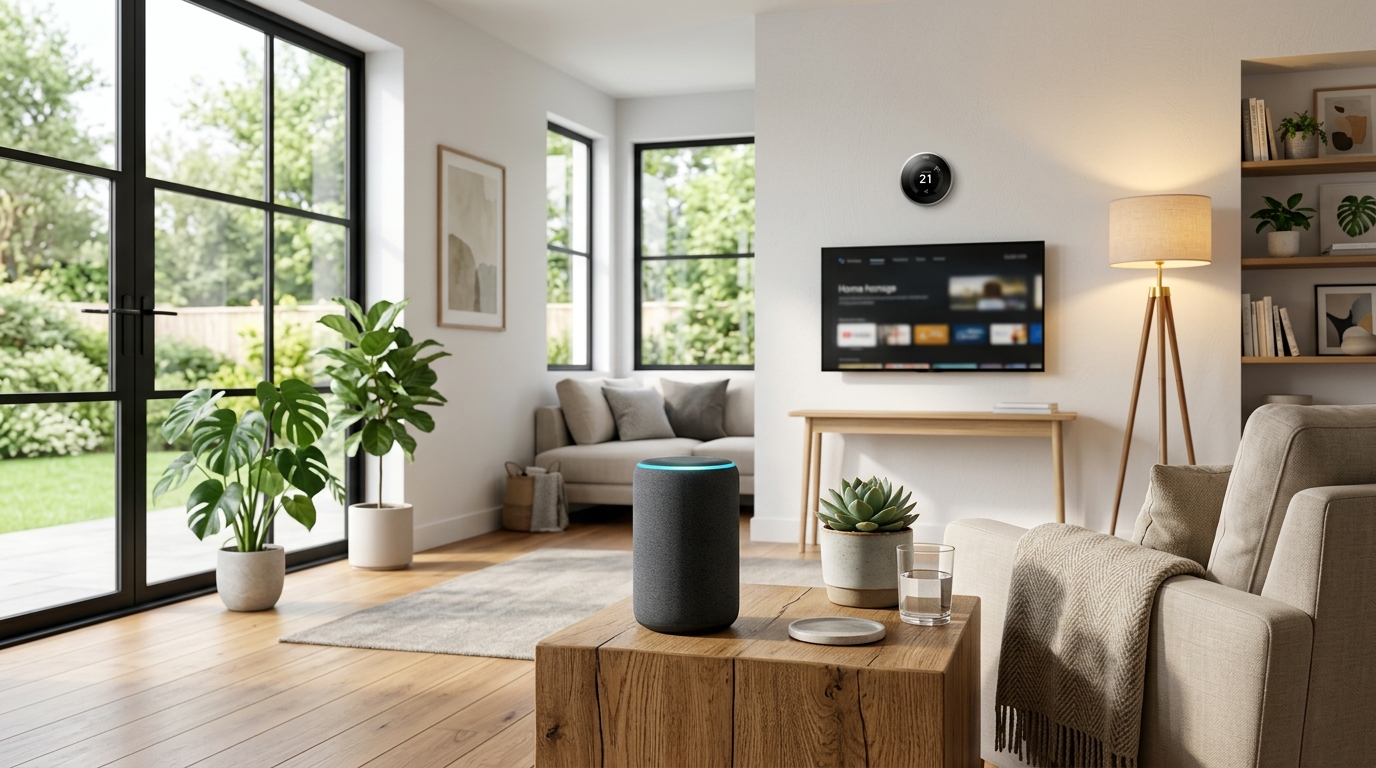
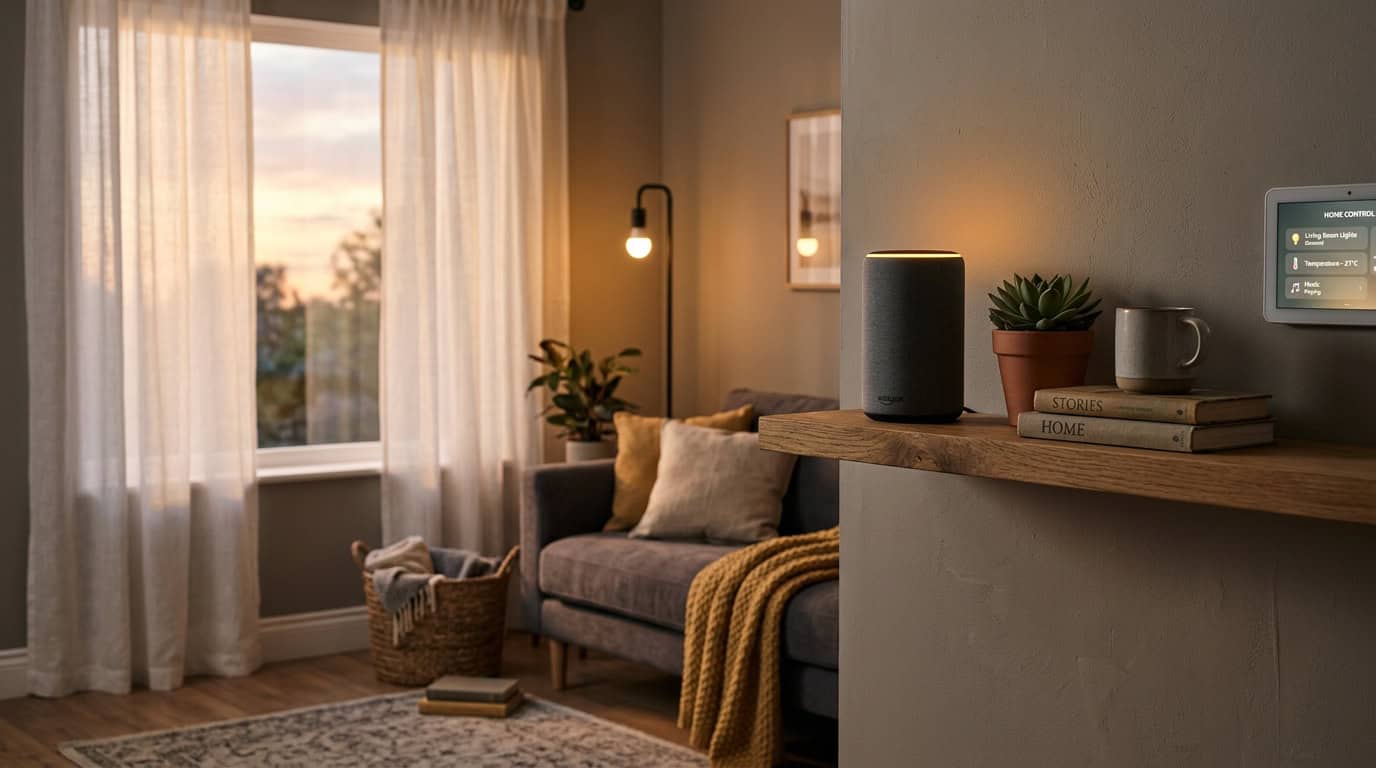
For years, talking to my smart speaker felt like talking to a very literal robot — because it was one. “Turn on the lights” meant the lights, all of them, whether I was in the kitchen or half-asleep in the bedroom. “Set a timer” meant exactly that and nothing else. Somewhere over the last year, that started to change, and not in a subtle way. Last week I said “I’m heading to bed” to an empty hallway, half out of habit, and my house actually did something about it — lights dimmed, thermostat dropped two degrees, the front door lock double-checked itself. I stood there for a second like an idiot, genuinely surprised.
That’s not a one-off gimmick. By 2026, voice-enabled home systems are built to interpret intent and context, so a casual phrase like that can trigger several coordinated actions at once instead of a single isolated command.
From Commands to Actual Conversations
The old model of smart home voice control was rigid by design — you learned the exact phrases the system expected, and deviating even slightly meant nothing happened. That’s fundamentally shifted. Voice assistants have moved from reactive, rule-based tools into adaptive systems that learn routines, anticipate needs, and coordinate entire living environments in something close to real time.
Newer systems lean on natural language understanding to catch what people actually say instead of what a manual tells them to say — a phrase like “it’s cold in here” gets processed and translated into a specific temperature adjustment, without anyone touching an app. Pair that with contextual awareness, where “turn on the lights” only activates the fixtures in the room you’re actually standing in, and the whole interaction starts feeling less like operating a machine and more like, well, talking to your house.
The Scale of This Is Bigger Than It Feels Day-to-Day
It’s easy to underestimate how mainstream this has gotten, mostly because it just quietly works now instead of announcing itself. Well over a hundred million Americans use voice assistants regularly at this point, and voice technology integration with smart home devices is projected to surpass a billion units globally as adoption keeps climbing. The market data backs that up from a different angle too — one estimate puts the voice assistant application market at roughly $7.8 billion in 2025, with projections putting it well over four times that size within the next decade.
None of that growth is happening because people suddenly love talking to speakers more. It’s happening because the assistants got good enough to trust with real routines — “morning mode” turning on lights, adjusting the thermostat, and reading the day’s headlines with one phrase, instead of three separate app taps.
Alexa, Google, or Apple — The Choice Still Comes Down to What You Already Own
If you’re picking a primary ecosystem this year, the honest answer is still “it depends on your existing devices,” more than any single assistant being objectively best. Alexa tends to win on sheer device compatibility, Google Assistant tends to feel more natural for households already deep in Nest and Android, and Apple’s Siri/HomeKit combination remains the pick for anyone prioritizing privacy and tight integration with an all-Apple household. Mixed-device homes are increasingly common too, and while that used to mean real headaches, the Matter standard has made a lot of that friction less painful — though it’s worth checking that your older devices actually support it before assuming everything will play nicely together.
The Privacy Backlash Is Real, and It’s Driving a Local Voice Movement
Not everyone is thrilled with where the big three have taken things, and that frustration has turned into an actual movement this year. Some longtime users have grown frustrated enough with ads and unwanted AI features creeping into commercial assistants that they’re building fully private, self-hosted alternatives running entirely on their own hardware — no cloud, no ads, no conversations sent to a company’s servers.
The tool most often cited for this is Home Assistant, an open-source platform that now ships with built-in support for local voice engines like Wyoming and Piper, letting people set custom wake words and process speech entirely offline. It’s not quite plug-and-play yet — microphone pickup in noisy rooms or from a distance still lags behind commercial smart speakers — but the trajectory is fast. Enthusiasts building these setups are confident that within a year, a typical local Home Assistant voice setup will match Alexa or Google Assistant for the basics: lights, climate, locks, and everyday routines.
Should You Actually Care About Any of This?
If your current setup already does what you need, there’s no urgency here — nobody needs to rebuild their home automation because of a trend piece. But if you’ve been mildly annoyed by ads sneaking into your smart speaker, or you’ve noticed your assistant misunderstanding you more than it should for 2026, it might be worth testing the waters. A local setup is a real weekend project, not a five-minute one, but for anyone who values privacy over convenience, it’s become a genuinely viable option instead of a hobbyist curiosity.
Either way, the bar for “smart” has moved. A voice assistant that just executes literal commands feels outdated now — the good ones this year are the ones that actually get what you’re going for, even when you don’t say it perfectly.