I used to think of my outdoor lights as exactly that — lights. Something that came on at dusk and off at dawn, nothing more sophisticated than a photocell from 1985. Then a neighbor’s Ring camera caught someone lingering near their driveway at 1 a.m., and their floodlight snapped on full brightness the second the camera flagged a person instead of a cat. The guy left in about four seconds flat. That’s when it clicked for me: lighting isn’t a security afterthought anymore, it’s arguably doing more deterrent work than the camera itself.
There’s actual research behind that instinct, too. A study published in the academic journal Crime Science found that security measures like indoor lights on timers and outdoor lights tied to motion sensors genuinely help keep homes safer from burglary — not just anecdotally, but as a measurable deterrent.
Lighting Has Quietly Become the First Line of Defense
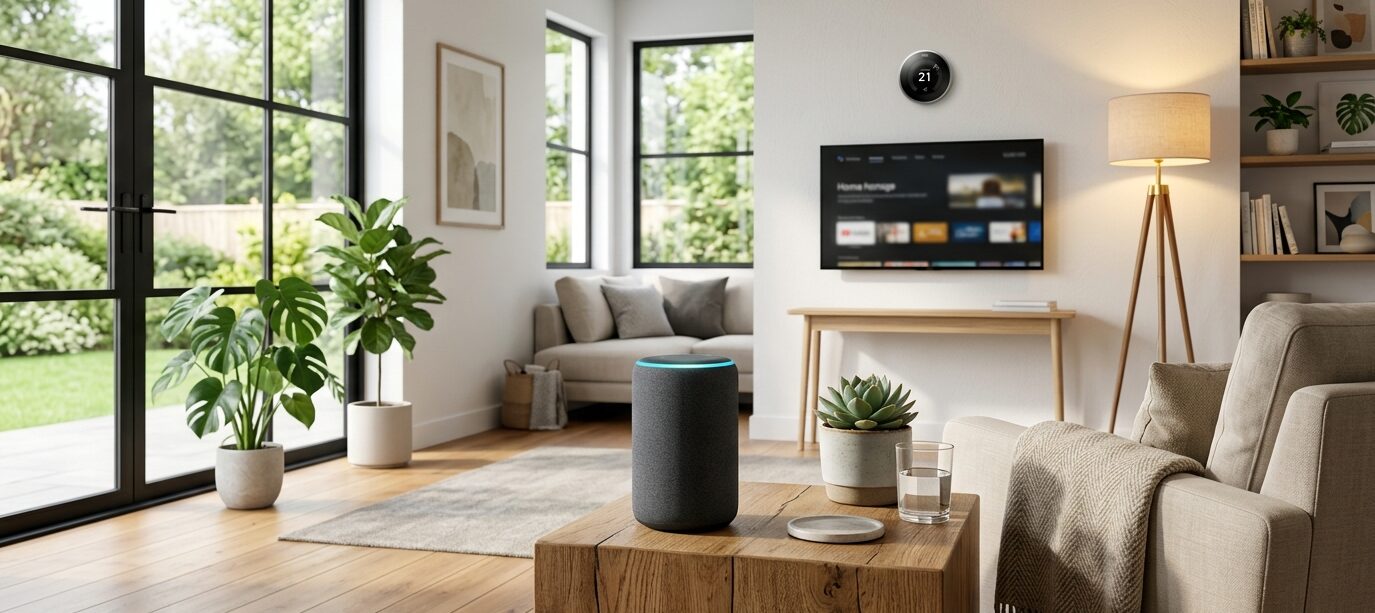
For most of smart home history, lighting and security lived in separate categories — you bought bulbs for convenience and cameras for protection. That line has basically dissolved. A modern smart home security system now integrates traditional security elements like alarms, cameras, and sensors with lighting, locks, and thermostats, all coordinated through a single app or voice assistant, rather than lighting existing as a bolt-on afterthought.
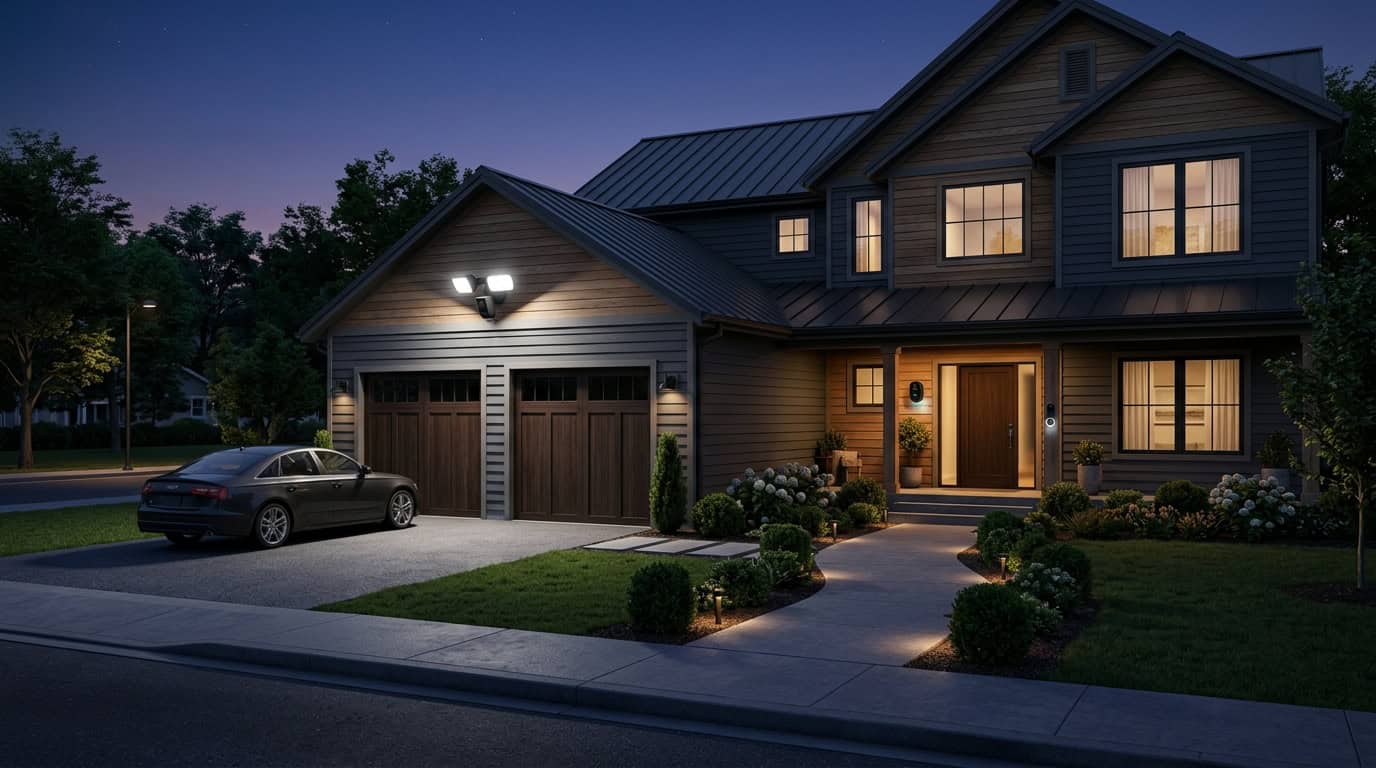
The logic behind that is pretty intuitive once you see it in action: a well-lit home is a much harder target, and a smart porch light paired with a video doorbell can automatically flood an entryway with light the moment motion is detected, which does a lot of the deterrent work before anyone even reaches the door.
AI Is Learning to Tell the Difference Between a Raccoon and a Person
The biggest practical upgrade this year isn’t brightness — it’s judgment. Newer outdoor lighting systems now include built-in AI capable of distinguishing between something like a stray animal and an actual human intruder, which cuts down dramatically on the false alarms and pointless floodlight triggers that made a lot of older motion-lighting setups more annoying than useful.
That kind of discrimination unlocks smarter automations, too. A common setup integrators are recommending this year: configure a security camera to flag “human” detections specifically, then trigger connected floodlights to snap to full brightness only when a person is detected after a certain hour. It’s a small tweak, but it’s the difference between lights that annoy you every time a cat crosses the yard and lights that actually mean something when they come on.
Philips Hue’s Big August Update
Signify, the company behind Philips Hue, rolled out a notable update this month specifically targeting the lighting-security overlap. The update adds enhanced home security features to Hue Secure, including smoke alarm sound detection that triggers instant alerts and activates navigational lighting to help residents find an exit, alongside expanded voice and app controls. It’s a good example of where the bigger players are pushing the category — not just “smarter bulbs,” but lighting systems that actively respond to emergencies, not just intrusions.
The Vacation Mode Trick That’s Gotten Genuinely Convincing
One of the oldest tricks in home security is making an empty house look occupied, and smart lighting has made that far more believable than a single lamp on a $15 timer ever could. Modern systems can mimic a household’s natural routine by turning interior and exterior lights on and off at varied, realistic intervals while residents are away, rather than following an obvious, repetitive schedule that a patient burglar could easily clock.
The Part Nobody Likes Talking About: Bulbs Can Be a Security Risk Too
It’s worth being honest about the flip side here. Smart bulbs are internet-connected devices, and internet-connected devices can be exploited if they’re not properly secured. Researchers have found that some smart bulb brands carry real vulnerabilities, including risks tied to unsecured network access that could expose other data on a home network — a reminder that convenience and security aren’t automatically the same thing. The practical takeaway isn’t “avoid smart bulbs,” it’s the basics that get repeated for a reason: keep firmware updated, use a dedicated guest network for IoT devices if your router supports it, and buy from brands with a track record of patching vulnerabilities quickly.
Is It Worth Upgrading Your Outdoor Lighting This Year?
If your current outdoor security setup is a camera and nothing else, this is a genuinely useful year to add lighting into the mix — the AI-based human detection alone makes a real difference in reducing false triggers, and the deterrent effect of a light snapping on is hard to overstate. If you’re already running a basic motion light, the upgrade case is more about integration than raw brightness: connecting your existing lights to your camera and voice ecosystem via Matter or a platform like Alexa or Google Home tends to deliver more real-world benefit than simply buying a brighter floodlight.
Either way, my porch light isn’t just illuminating the doorstep anymore. It’s doing a job.