When I first got into gardening, I made the classic beginner mistake – I went to the garden center and bought literally everything that looked cool. Fancy pruners with cushioned handles, a complicated watering system, some weird gadget that was supposed to measure soil pH… you name it, I probably bought it.
Fast forward six months, and most of that stuff was sitting unused in my garage. Turns out, you really don’t need all that fancy equipment when you’re starting out. In fact, some of my most-used tools are the simplest, cheapest ones I own.
So let me save you some money and frustration. Here are the actual essential tools you need as a beginner gardener – no fluff, no expensive nonsense, just the real deal tools that you’ll actually use.
1. A Good Pair of Gloves (Seriously, Don’t Skip This)
I know, I know – gloves seem boring. But trust me on this one. I spent my first few weeks gardening without gloves because I thought they were unnecessary. My hands looked like I’d been in a fight with a rosebush (which, to be fair, I kind of had).
You don’t need expensive leather gloves or anything fancy. Just get a decent pair that fits well and protects your hands from thorns, splinters, and dirt. I personally like the ones with the rubber coating on the palms because they give you a good grip even when things are wet.
What to look for:
- Comfortable fit (not too tight, not too loose)
- Breathable material so your hands don’t get all sweaty
- Good grip on the palms
- Long enough to protect your wrists
I usually buy a couple of pairs at once because I’m constantly losing one glove. It’s like they just disappear into another dimension or something.
2. Hand Trowel – Your New Best Friend
If I could only keep one garden tool, it would probably be my hand trowel. This thing gets used constantly. Planting seedlings, digging up weeds, mixing soil in containers, making holes for bulbs – it does everything.
I learned the hard way that not all trowels are created equal. My first one was cheap and flimsy, and the handle broke off after like two weeks. Total waste of money.
Get a trowel with:
- A sturdy metal blade (stainless steel is great because it won’t rust)
- A comfortable handle that won’t give you blisters
- Good weight to it – if it feels too light, it’s probably too weak
Some people prefer trowels with measurements marked on them, which can be handy for planting at the right depth. Not essential, but kind of nice.
3. Pruning Shears (Also Called Secateurs)
You’re going to need to cut things. Dead flowers, overgrown branches, herbs for cooking, whatever. A good pair of pruning shears makes this so much easier than trying to use regular scissors (which I definitely never did… okay, I totally did that before I knew better).
There are two main types – bypass and anvil. For beginners, I’d recommend bypass pruners. They cut like scissors and work great for most garden tasks. Anvil pruners can crush stems if you’re not careful.
What matters:
- Sharp blades (dull blades crush stems instead of cutting cleanly)
- Comfortable grip
- Safety lock so you don’t accidentally cut yourself
- Easy to clean
You don’t need the most expensive ones, but don’t get the absolute cheapest either. Mid-range pruners will last you years if you take care of them.
4. Garden Hose with a Spray Nozzle
Unless your garden is tiny enough to water with a watering can, you need a hose. And please, get a spray nozzle for it. Trying to water with just the hose end is messy and wastes water.
I started with a cheap hose and regretted it immediately. It kinked every five seconds, sprung leaks, and made watering way more annoying than it needed to be. A decent quality hose is worth the extra money.
Things to consider:
- Length – measure how far you need to reach before buying
- Kink-resistant (this is huge – kinks drive me crazy)
- UV-resistant material so it lasts longer in the sun
- A nozzle with different spray patterns
Pro tip: Get a hose hanger or reel. Leaving your hose lying around in a tangled mess will shorten its life and make you want to scream every time you need to use it.
5. A Sturdy Rake
You need something to clear leaves, spread mulch, and level soil. A basic garden rake does all of this and more. Don’t confuse it with a leaf rake though – those are the ones with the flexible tines. Garden rakes have rigid metal tines and are way more versatile.
My rake gets used year-round. In fall for leaves, in spring for spreading compost, in summer for smoothing out garden beds. It’s one of those tools that seems boring but you end up using all the time.
Look for:
- Metal head (more durable than plastic)
- Comfortable handle length for your height
- Sturdy tines that won’t bend easily
I have a smaller hand rake too for getting into tight spaces, but the full-size one is what I reach for most often.
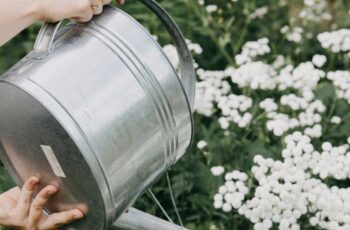
6. Watering Can
Even if you have a hose, you’ll want a watering can. It’s perfect for container plants, newly planted seedlings, and anywhere you need more precision than a hose provides.
I use mine constantly for my potted plants and for watering seedlings before they’re established enough to handle the hose. It’s also great for mixing and applying fertilizer.
Features to look for:
- 2-gallon capacity is a good size (not too heavy when full, but holds enough water)
- Comfortable handle
- A removable rose (that’s the sprinkler head thing) – you’ll want the option to pour without it sometimes
- Balanced design so it doesn’t tip over easily
Plastic watering cans are lighter and cheaper. Metal ones look nicer but can rust. Either works fine – just pick what suits you.
7. Garden Spade or Shovel
For digging bigger holes, moving soil, edging beds, or transplanting larger plants, you need something bigger than a hand trowel. A garden spade or shovel does the job.
There’s actually a difference between spades and shovels, though most people use the terms interchangeably. Spades have flat edges and are better for cutting through soil and roots. Shovels have curved blades and are better for scooping. Honestly, as a beginner, either will work fine.
What to check:
- Comfortable handle length (should reach about chest height)
- Strong blade material
- Sturdy handle that won’t snap under pressure
- Footrest on the blade to step on when digging
I have a small spade that’s easier to maneuver in tight spaces. If you can only get one, I’d say go with a spade – it’s more versatile.
8. Wheelbarrow or Garden Cart
Okay, this one isn’t absolutely essential if you have a really small garden. But if you’re dealing with mulch, compost, heavy pots, or just lots of tools and supplies, a wheelbarrow makes life so much easier.
I spent way too much time making multiple trips carrying bags of soil and pots of plants before I finally got a wheelbarrow. Wish I’d done it sooner.
Consider:
- One-wheel vs. two-wheel (one-wheel is more maneuverable, two-wheel is more stable)
- Size – don’t get one so big you can’t lift it when it’s full
- Pneumatic tires are easier to push on rough ground
- Metal wheelbarrows last longer but are heavier
Some people prefer garden carts with four wheels. They’re more stable and easier to use on flat ground, but wheelbarrows are better for uneven terrain.
Tools You DON’T Need Right Away
Before we wrap up, let me save you from wasting money on stuff you don’t need yet:
Fancy soil testers – Your plants will tell you if something’s wrong. You can always test later if needed.
Power tools – Unless you’re maintaining a huge property, hand tools work fine and are way cheaper.
Specialized tools – Things like bulb planters, weeders with specific designs, soil scoops… you can manage without these when you’re starting out.
Every type of hoe ever made – There are like fifty different kinds. You don’t need any of them initially.
That weird garden gadget from the infomercial – Just… no.
Taking Care of Your Tools
Here’s something nobody tells beginners but is super important – take care of your tools and they’ll last forever. I learned this after replacing the same cheap tools multiple times.
Quick maintenance tips:
- Clean dirt off tools after use (just spray with the hose)
- Dry metal parts to prevent rust
- Sharpen blades once or twice a year
- Oil moving parts occasionally
- Store tools somewhere dry
I keep a bucket of sand mixed with a little motor oil in my shed. After cleaning tools, I stick them in the sand a few times. It cleans them, prevents rust, and keeps them sharp. Super easy.
The Bottom Line on Garden Tools
You really don’t need to spend a fortune on tools when you’re starting out. These eight essentials will handle probably 95% of what you need to do in a beginner garden. As you get more experience and figure out what kind of gardening you enjoy most, you can add more specialized tools.
The key is buying decent quality – not the cheapest thing you can find, but not the most expensive either. Mid-range tools from reputable brands will serve you well for years.
And here’s a secret – check garage sales and thrift stores. I’ve found some amazing tools for next to nothing from people who bought a bunch of stuff, never used it, and then sold it all when they gave up on gardening. Their loss is your gain!
Start with these basics, learn how to use them properly, and take care of them. Everything else can wait until you actually need it. Your garden (and your wallet) will thank you.

)