Watering seems simple enough – you just spray water on plants, right? That’s what I thought when I started gardening. I’d drag my hose around, blast everything for a few minutes with the spray nozzle on full power, and call it done.
My plants told a different story. Some areas stayed soggy while others dried out completely. Water ran off faster than soil could absorb it. My water bill was ridiculous. And I was spending way more time watering than I needed to because I was doing it so inefficiently.
Everything changed when I invested in proper watering tools and learned to use them correctly. My water usage dropped significantly. Plants grew better because they received consistent, appropriate moisture. And watering became easier and faster, not harder.
The right watering tools make a massive difference in garden success, water conservation, and how much time you spend on this essential task. This guide covers the best watering tools for different situations, from small container gardens to large vegetable plots, and how to use them effectively.
Understanding Your Watering Needs
Before buying tools, consider what you’re watering and how your garden is set up. Different situations call for different solutions.
Small container gardens on patios or balconies need simple, precise watering. A good watering can handles this perfectly. There’s no need for complicated systems when you’re watering a dozen pots.
In-ground beds and vegetable gardens benefit from more efficient systems. Hauling a hose around for 30 minutes every evening gets old fast, especially in summer when gardens need daily watering.
Large properties with extensive plantings need automated systems or you’ll spend hours watering. Nobody has time to hand-water half an acre of gardens daily.
Sloped areas require gentle watering that doesn’t run off before soaking in. High-pressure spray just creates erosion.
New plantings need frequent, gentle watering during establishment. Established plants need less frequent but deeper watering.
Think about your specific situation. What seems easiest at first (sprinklers everywhere) often isn’t the most effective or efficient long-term solution.
The Essential Garden Hose
A quality garden hose is the foundation of most watering systems. Cheap hoses are false economy – they kink constantly, develop leaks, and need replacing frequently.
Hose length matters. Measure the distance from your water source to the farthest point you need to reach, then add 10-15 feet. Too short is frustrating. Too long means dragging excess hose around.
I have several hoses in different lengths rather than one super-long hose. A 25-foot hose for areas near the faucet, a 50-foot hose for mid-range areas, and a 100-foot hose that reaches everywhere. Using the right length for each area makes watering much easier.
Hose diameter affects water flow. Standard 5/8-inch diameter works well for most gardens. Smaller 1/2-inch hoses are lighter but provide less water pressure. Larger 3/4-inch hoses are heavy but deliver maximum flow for large areas.
Hose material determines durability and flexibility.
Rubber hoses are heavy but extremely durable. They resist kinking better than other types and last for many years. I use rubber hoses for permanent installations where weight doesn’t matter.
Vinyl hoses are lightweight and inexpensive but kink easily and crack in cold weather. They’re fine for light use but frustrating for serious gardening.
Rubber-vinyl blends balance weight and durability. They’re my go-to for general use – light enough to move easily but durable enough to last several seasons.
Features worth having:
Kink-resistant construction saves endless frustration. Even supposedly kink-free hoses will kink occasionally, but good ones resist it far better than cheap hoses.
Brass fittings last longer than plastic. They’re worth the extra cost, especially on hoses you’ll use frequently.
UV-resistant materials prevent sun damage that causes cracking and brittleness. This matters if hoses sit in the sun rather than being coiled in shade.
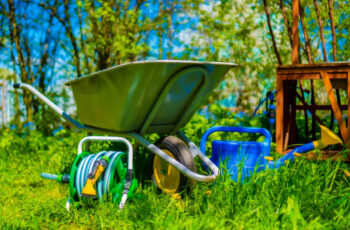
Proper hose storage extends life dramatically. I use hose reels mounted near faucets. Coiling hoses neatly prevents kinking and tangling. Never leave hoses lying in the sun or leave water sitting in them – both shorten lifespan.
Watering Cans: Simple and Effective
For container gardens, small beds, and precise watering, a good watering can is unbeatable. Don’t dismiss them as old-fashioned – they’re incredibly practical for certain situations.
Two-gallon capacity is ideal for most gardens. One gallon is too small – you’re constantly refilling. Larger than two gallons becomes too heavy to carry comfortably when full.
I have a two-gallon can that I use constantly for containers on my deck and for watering newly transplanted seedlings that need gentle, precise watering.
Metal or plastic? Both work. Metal cans look nicer and last forever if stored dry between uses. Plastic is lighter and won’t rust, but UV exposure eventually makes it brittle. I use plastic because I’m hard on equipment and don’t worry about denting it.
Removable rose (the sprinkler head) is essential. With the rose attached, you get gentle rain-like spray perfect for seedlings. Remove it to fill containers faster or to pour water directly at plant bases.
Long spout provides better reach, making it easier to water hanging baskets or containers at the back of a shelf without contorting yourself.
Balanced design matters more than you’d think. Poorly designed cans tip over easily or pour awkwardly. Try holding a can before buying if possible – it should feel balanced and comfortable.
Two cans are better than one if you water many containers. Fill both, carry them together (one in each hand for balance), and you’ll make half as many trips back to the faucet.
Spray Nozzles: Control Water Flow
A good spray nozzle transforms a basic hose into a versatile watering tool. I have several nozzles for different purposes.
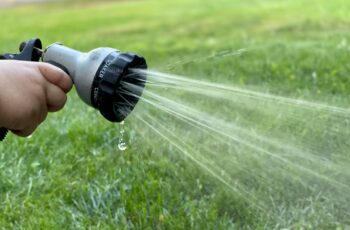
Adjustable spray nozzles offer multiple patterns from fine mist to powerful jet. They’re the most versatile option. I keep one on my main garden hose year-round.
Look for metal construction – plastic nozzles break quickly, especially if you occasionally drop them on concrete like I do. A comfort grip reduces hand fatigue during extended use.
Trigger control lets you adjust flow and turn water on and off without returning to the faucet. This seems minor until you realize how much time you save not walking back and forth.
Watering wands extend your reach significantly. They’re basically long tubes (usually 16-36 inches) with a gentle shower head on the end and a shut-off valve at the handle.
I use a watering wand for hanging baskets, tall plants, and containers that are hard to reach. The gentle shower head doesn’t blast soil out of pots, and the extension saves my back from constant bending.
Fan spray nozzles create a wide, flat spray pattern perfect for watering garden beds. Water falls gently like rain rather than blasting plants. This is my preferred nozzle for general bed watering.
Avoid nozzles that leak at the connection or are difficult to adjust. Cheap nozzles frustrate you every time you use them. Spending a bit more for quality pays off quickly.
Sprinklers: Convenient but Inefficient
Sprinklers have their place, but they’re rarely the most efficient watering method. They’re convenient for lawns and large areas where precise watering isn’t critical.
Oscillating sprinklers wave back and forth, covering rectangular areas. They’re common and inexpensive but don’t water very evenly – edges get more water than the center.
Impact sprinklers make that distinctive clicking sound as they rotate in circles. They cover large areas and adjust easily for different patterns. These work well for lawn watering.
Stationary sprinklers stay in one spot and spray in a fixed pattern (circle, square, etc.). They’re simple but you need to move them frequently to cover an area.
I use sprinklers only for lawn watering now. For garden beds, more efficient methods waste less water and do a better job.
Problems with sprinklers:
- Water lands on foliage, promoting diseases
- Significant evaporation loss, especially in hot weather
- Wind blows water away from target areas
- Hard to control exactly where water goes
- Often waste water on paths, driveways, etc.
If you use sprinklers, water in early morning when evaporation is minimal and foliage has time to dry during the day.
Soaker Hoses: Efficient and Easy
Soaker hoses revolutionized my vegetable garden watering. They’re porous hoses that “sweat” water along their entire length, delivering moisture directly to soil.
Benefits are significant:
- Water goes straight to roots with minimal waste
- No foliage wetting means fewer disease problems
- Extremely water-efficient
- Can run while you do other things
- Cheap and easy to install
I lay soaker hoses along my vegetable rows in spring and leave them all season. I just turn them on for 30-60 minutes every few days (or daily in hot weather) and walk away. No more dragging hoses around or standing with a spray nozzle.
Installation is simple. Lay hoses where you want them, connect to regular hose with adapter, and turn on water. That’s it. I weave mine between plants in established beds or run them down rows in vegetable gardens.
Cover with mulch to hide them and reduce evaporation. This also prevents UV damage that makes hoses brittle over time.
Pressure matters. Soaker hoses work on low pressure – 10-20 PSI is ideal. Higher pressure causes uneven distribution and can blow seams apart. A pressure regulator ($10-15) solves this if your water pressure is high.
Limitations to know:
- Only work well on relatively flat ground – slopes create uneven watering
- Maximum effective length is about 100 feet – beyond that, the end doesn’t get adequate water
- Need at least two hours to deliver one inch of water in most cases
Despite limitations, soaker hoses are my favorite watering tool for established beds and vegetable gardens. The time and water savings are enormous.
Drip Irrigation: The Ultimate System
Drip irrigation is the most water-efficient method available, delivering water directly to each plant’s root zone through a network of tubes and emitters.
Water savings are dramatic – up to 50% less water than sprinklers because there’s zero evaporation and no runoff. Every drop goes exactly where you want it.
Precision is excellent. Each plant receives exactly the water it needs. You can adjust individual emitters for plants with different requirements.
Automation is easy. Add a timer and your garden waters itself. I set mine to run early morning for 30 minutes every other day during summer, and I barely think about watering.
Initial setup takes time and investment, but systems last for years with minimal maintenance. Basic kits start around $50-75 and cover small to medium gardens.
Components include:
Main line tubing (usually 1/2-inch) runs from the water source through your garden. This is the backbone of the system.
Emitter tubing (1/4-inch) branches off the main line to individual plants or specific areas. Emitters drip water at controlled rates – typically 1/2 to 2 gallons per hour per emitter.
Stakes and clips hold tubing in place. Systems shift as you work around them, so securing tubing prevents it from ending up in the wrong spots.
Pressure regulators reduce household water pressure to the 20-30 PSI drip systems need.
Filters prevent emitters from clogging with sediment. Clean them occasionally or they stop water flow.
Timers automate the whole system. Spend $30-100 on a timer and never hand-water again.
I installed drip irrigation in my perennial beds five years ago and it’s been wonderful. The initial weekend setting it up paid for itself many times over in water savings and time not spent watering.
Maintenance is minimal – check for clogs occasionally, adjust emitters as plants grow, and repair any leaks. Winterize by draining the system in cold climates.
Rain Barrels: Harvesting Free Water
Rain barrels collect roof runoff, providing free water for your garden while reducing stormwater runoff.
A typical 55-gallon barrel fills completely from just 1/4 inch of rain on a modest roof. In areas with reasonable rainfall, you can collect hundreds of gallons per year.
Benefits include:
- Free water once the barrel is paid for
- Rainwater is naturally soft, free of chlorine and fluoride
- Reduces water bills
- Helps manage stormwater runoff
- Plants often prefer rainwater to treated tap water
Setup is straightforward. Position barrels under downspouts, install a diverter that sends water into the barrel, add a spigot near the bottom for easy access.
I have three rain barrels positioned around my property. They provide enough water for most of my container watering throughout summer, noticeably reducing my water bill.
Considerations:
- Mosquitoes can breed in standing water – use tight-fitting lids with screens
- Empty and clean barrels annually to prevent algae buildup
- In cold climates, drain barrels before freezing weather
- Position barrels on blocks or platforms for better water pressure
- Link multiple barrels with overflow connectors to increase capacity
Smart Watering Controllers
Modern watering technology includes smart controllers that adjust watering based on weather, soil moisture, and plant needs.
Weather-based controllers connect to internet weather services and automatically reduce or skip watering when rain is forecast or has occurred. This alone can save 20-40% on water usage.
Soil moisture sensors measure actual soil moisture and trigger watering only when needed, not on a fixed schedule. This is the most efficient approach.
I upgraded to a smart controller last year and the difference has been remarkable. My plants are healthier because they receive more consistent moisture, and my water bill dropped despite expanding my gardens.
They’re more expensive ($100-300) than basic timers, but water savings pay back the investment within a couple of years in most cases.
Putting It All Together
The best watering system uses the right tool for each situation:
Small container gardens – Quality watering can, maybe a gentle spray nozzle for hanging baskets
Medium gardens with mixed beds – Good hose with spray nozzle or wand for flexibility, soaker hoses for established beds
Large vegetable gardens – Drip irrigation or soaker hoses on a timer
Newly planted areas – Gentle sprinklers or watering cans until plants establish, then transition to more efficient methods
Established perennial beds – Drip irrigation on a smart controller
I use all these tools in different parts of my garden. Containers get hand-watered with a watering can. Vegetable beds have soaker hoses. Perennial beds have drip irrigation on a timer. Having the right tool for each area makes watering efficient and effective.
The Bottom Line
Good watering tools are an investment that pays dividends every single day you garden. They save time, conserve water, and grow healthier plants through more appropriate, consistent moisture.
Start with basics – a quality hose and good nozzle work for any garden. Add soaker hoses or drip irrigation for areas you water frequently. Consider automation once you understand your garden’s needs.
Your plants, your water bill, and your schedule will all thank you for upgrading from dragging a hose with a sprayer around every evening. Efficient watering systems are one of the best investments you can make in your garden.