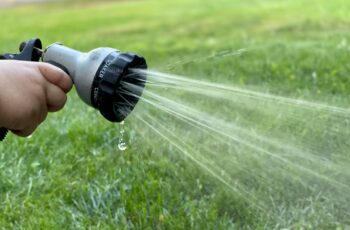
Watering the lawn and garden manually gets old fast. I spent my first summer as a homeowner dragging hoses around every evening, moving sprinklers from spot to spot, and invariably forgetting to move them on time so some areas got flooded while others stayed dry. My water bill was astronomical, my lawn had brown patches despite all that effort, and I resented the time spent on this tedious chore.
That fall, I researched sprinkler systems and installed a simple setup that transformed my watering routine. Now my lawn gets consistent, appropriate moisture without daily effort. My water usage actually decreased despite better coverage. And I reclaimed my evenings for activities more enjoyable than watching sprinklers.
Whether you need to water a small lawn, extensive gardens, or a large property, understanding the different sprinkler types and systems helps you choose the most effective and efficient solution for your specific situation.
This comprehensive guide covers everything you need to know about garden sprinklers – from basic portable models to sophisticated in-ground systems, helping you make an informed decision about what works best for your yard and budget.
Understanding Your Watering Needs
Before selecting a sprinkler system, assess your specific watering requirements. Different situations call for different solutions.
Lawn size matters significantly. A small suburban lawn under 5,000 square feet has different needs than a half-acre property. Larger areas often justify more sophisticated systems, while small lawns work fine with simple portable sprinklers.
My property is about a quarter acre with lawn, garden beds, and some ornamental plantings. This size works well with a combination approach – in-ground sprinklers for the lawn and hose-end sprinklers for gardens and beds.
Water pressure affects sprinkler performance dramatically. Low pressure limits your options to sprinklers designed for such conditions. High pressure allows more flexibility but may require pressure regulators for some sprinkler types.
Test your water pressure with an inexpensive gauge available at hardware stores. Most residential water systems provide 40-70 PSI, which works for most sprinkler types.
Yard layout influences system design. Rectangular lawns are straightforward. Irregular shapes with islands, slopes, and obstacles require more planning. Consider existing trees, structures, and hardscaping that affect sprinkler placement and coverage.
Plant types determine watering frequency and duration. Lawns need different watering patterns than flower beds or vegetable gardens. Established shrubs need less frequent watering than annual flowers.
Climate and season affect watering needs obviously. Hot, dry climates require more frequent watering than cooler, humid areas. Most areas need supplemental watering primarily in summer, though some climates require year-round irrigation.
Your involvement level – how much time and effort you want to invest in watering – should guide your choice. Some people enjoy the ritual of evening watering. Others want it completely automated. Neither approach is wrong; they just require different equipment.
Types of Garden Sprinklers
Multiple sprinkler types exist, each with specific advantages and ideal applications.
Oscillating Sprinklers
These familiar sprinklers wave back and forth, shooting water in an arc that covers a rectangular area. They’re among the most common and recognizable sprinkler types.
Advantages include:
- Good coverage of rectangular areas
- Adjustable width and sometimes length
- Relatively inexpensive ($15-40)
- Easy to move and position
- Gentle rain-like spray that doesn’t compact soil
Disadvantages include:
- Uneven coverage with more water at the edges than center
- Vulnerable to wind which distorts the pattern
- Moving parts that can fail or require maintenance
- Not ideal for irregular spaces
I use oscillating sprinklers for my rectangular back lawn area. The pattern matches the space well, and I appreciate the gentle, rain-like spray.
Impact Sprinklers (Impulse Sprinklers)
These make the distinctive clicking sound as they rotate in circles, covering large areas with a pulsing spray. They’re the workhorses of lawn irrigation.
Advantages include:
- Excellent coverage for large areas
- Very durable with few parts to break
- Work well in varying water pressure conditions
- Adjustable coverage patterns (full circle, partial circle)
- Handle wind better than oscillating types
Disadvantages include:
- Can be noisy (that distinctive clicking)
- Higher initial cost ($20-60)
- Sometimes spray too hard for delicate plantings
- Circular pattern doesn’t fit rectangular areas perfectly
These are my go-to for larger lawn areas. The durability and large coverage area make them extremely practical despite the clicking sound that bothers some people.
Rotating Sprinklers
Multiple arms rotate while spraying water in circles. They come in various designs from simple two-arm models to complex multi-arm versions.
Advantages include:
- Even coverage in circular patterns
- Relatively inexpensive ($10-30)
- Gentle spray suitable for most plantings
- Low maintenance
Disadvantages include:
- Limited range compared to impact sprinklers
- Coverage pattern fixed to circles
- Can clog if water contains debris
- Wind affects coverage significantly
I find these work well for smaller lawn areas and spot watering specific zones.
Stationary Sprinklers
These don’t move but spray water in a fixed pattern – circle, square, or other shapes depending on design. They range from simple single-nozzle designs to complex multi-nozzle systems.
Advantages include:
- Extremely simple with no moving parts
- Very inexpensive ($5-20)
- Reliable and durable
- Good for small, defined areas
Disadvantages include:
- Limited coverage area
- Need frequent repositioning for larger spaces
- Coverage quality varies widely by design
- Can create puddles in the center
I use these primarily for small beds and targeted watering rather than general lawn coverage.
Traveling Sprinklers
These self-propelled sprinklers follow a hose path across your lawn, moving slowly while watering. They’re like small robots that do the moving for you.
Advantages include:
- Cover large areas without manual moving
- Even coverage along the travel path
- Fun to watch (a minor but real benefit)
- Good for long, narrow areas
Disadvantages include:
- Expensive ($60-150+)
- Require flat terrain to function properly
- Slow to cover large areas
- Must monitor to ensure proper function
I’ve never owned one but have friends who swear by them for their long, narrow suburban lots.
Soaker Hoses and Drip Systems
While not technically sprinklers, these ground-level watering systems deserve mention as alternatives.
Advantages include:
- Extremely water-efficient (minimal evaporation)
- Water goes directly to roots
- Keep foliage dry, reducing disease
- Can be hidden under mulch
- Work on low water pressure
Disadvantages include:
- Not suitable for lawns (only for beds and gardens)
- Limited coverage per hose
- Can clog over time
- Installation requires planning
I use soaker hoses extensively in garden beds and find them far superior to overhead watering for most plantings except lawns.
In-Ground Sprinkler Systems
For permanent, automated lawn watering, in-ground systems are the ultimate solution.
Pop-Up Spray Heads
These heads sit flush with the ground when off and pop up when water pressure activates them. They spray water in fixed patterns (quarter-circle, half-circle, full circle, etc.).
Best for:
- Small to medium lawn areas
- Areas near buildings and hardscaping
- Spaces requiring precise coverage patterns
Coverage: Typically 8-15 feet radius
I have these around the edges of my lawn where precise pattern control prevents watering the house, driveway, and sidewalk.
Rotor Heads
These rotate while spraying, covering larger areas than pop-up spray heads. They’re essentially built-in versions of impact sprinklers.
Best for:
- Large, open lawn areas
- Areas requiring long throw distance
- Main lawn coverage
Coverage: Typically 15-50 feet radius depending on model
The center of my lawn uses rotor heads for their excellent coverage and efficiency.
System Components Beyond Heads
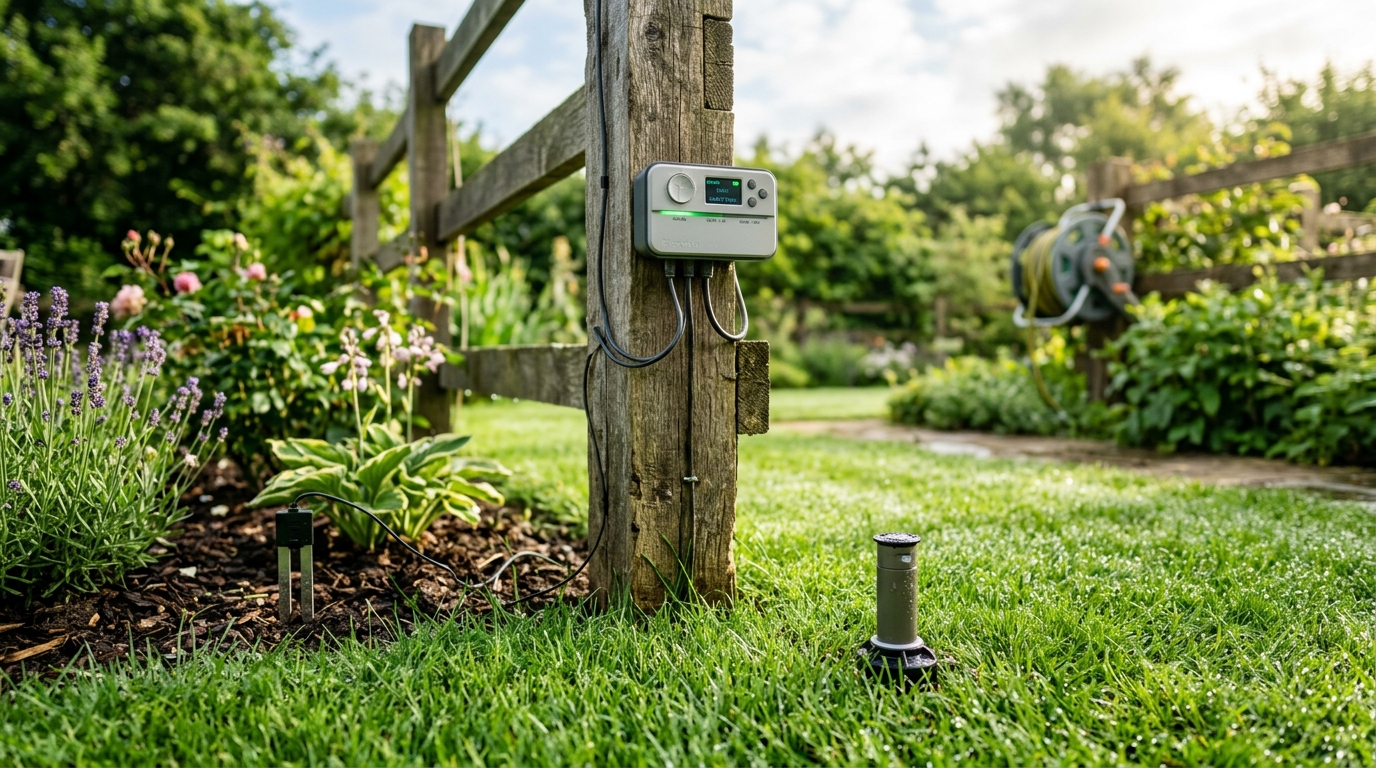
Controllers (timers) automate watering schedules. Modern smart controllers adjust watering based on weather, soil moisture, and other factors. This automation is the primary benefit of in-ground systems.
Valves control water flow to different zones, allowing varied schedules for different areas.
Rain sensors prevent watering during or after rain, saving water and money.
Backflow preventers are required by code in most areas to prevent contaminated water from entering the main water supply.
Installing In-Ground Systems
Professional installation costs $2,500-$5,000+ for typical residential lawns. DIY installation cuts costs significantly but requires time, physical labor, and some technical knowledge.
I hired professionals for my system. The cost seemed high initially, but the time savings, proper design, and warranty made it worthwhile. However, I have friends who successfully installed their own systems using online tutorials and rental equipment.
Design is critical and often where DIY systems fail. Proper design ensures adequate coverage, appropriate water pressure at each head, and efficient water use. Many suppliers offer free design services if you buy materials from them.
Zoning divides your property into areas watered together. Each zone should have similar sun exposure, soil type, and plant needs. Mixing lawns with flower beds in one zone, for example, means one gets too much or too little water.
Head spacing and overlap must be calculated correctly. Sprinklers should overlap by about 50% – where one head’s coverage ends, the next should be halfway through its range. This ensures even coverage without dry spots.
Portable vs. In-Ground: Making the Choice
The decision between portable sprinklers and in-ground systems depends on multiple factors.
Choose portable sprinklers if:
- Your lawn is small (under 3,000 square feet)
- You’re renting or may move soon
- Budget is tight (under $500 for entire system)
- You enjoy the manual involvement
- Your watering needs are seasonal
- Your layout changes frequently
Choose in-ground systems if:
- Your lawn is large (over 5,000 square feet)
- You own your home long-term
- You can invest $2,500-5,000+
- You want automation and convenience
- You water year-round or most of the year
- You have a fixed landscape design
I lived with portable sprinklers for several years before installing an in-ground system. The portable approach worked but required evening effort I grew tired of. The automated in-ground system was one of the best home improvements I’ve made.
Water Efficiency and Conservation
Regardless of sprinkler type, efficient water use matters for both environmental and economic reasons.
Water in early morning (4-8 AM ideally) when evaporation is minimal, wind is typically calm, and water pressure is often higher. This timing maximizes efficiency.
I set my system to run at 5 AM. The lawn is dry by the time we’re outside, and I never see the system running – it just happens.
Water deeply and infrequently rather than shallow and often. Deep watering encourages deep root growth, creating healthier, more drought-tolerant lawns. Frequent shallow watering creates shallow roots and water-dependent grass.
Most lawns need about 1 inch of water weekly including rainfall. Measure this by placing straight-sided containers (tuna cans work perfectly) around your watering area and measuring how long it takes to accumulate 1 inch.
Adjust for weather and season. Don’t water during or shortly after rain (seems obvious but many people do it). Reduce watering in cooler weather when evaporation is lower and grass grows slower. Increase only when conditions are hot and dry.
Smart controllers make this easy by adjusting automatically. Even basic rain sensors prevent wasteful watering during storms.
Match water to plant needs. Lawns, flowers, vegetables, and shrubs all have different water requirements. Zone systems appropriately so each area gets what it needs, no more and no less.
Check for leaks and inefficiencies regularly. Broken sprinkler heads, leaking valves, and misaligned heads waste enormous amounts of water. Monthly walk-throughs catch problems before they get expensive.
Maintenance and Winterization
Proper maintenance extends sprinkler life and ensures consistent performance.
Regular cleaning removes debris from spray nozzles and prevents clogging. This is especially important if your water contains sediment.
Inspect portable sprinklers before each season. Check for cracks, worn seals, and damaged components. Replace or repair as needed.
In-ground systems need seasonal maintenance:
- Spring: Test all zones, adjust heads, check for winter damage
- Summer: Monitor for problems, adjust coverage as needed
- Fall: Prepare for winterization
Winterization is critical in freezing climates. Water left in pipes and sprinkler heads can freeze, expand, and crack components, leading to expensive spring repairs.
Professional winterization costs $50-100 and is worth every penny in cold climates. They use compressed air to blow all water from the system.
DIY winterization is possible but requires an air compressor and knowledge of your system’s configuration. One mistake can cause damage worse than the winterization prevents.
I pay for professional winterization in fall and spring system start-up. The cost is reasonable and eliminates worry about freeze damage.
Troubleshooting Common Sprinkler Problems
Most sprinkler problems have simple solutions.
Dry spots in lawn usually indicate:
- Inadequate overlap between sprinkler zones
- Clogged or broken heads
- Insufficient water pressure
- Not running long enough
Overwatered areas suggest:
- Sprinklers overlapping too much
- Watering too frequently
- Broken heads stuck in open position
- Poorly draining soil
Uneven coverage happens when:
- Sprinklers aren’t level
- Water pressure varies across zones
- Wind disrupts spray patterns
- Heads need adjustment or replacement
Low pressure can result from:
- Too many heads on one zone
- Leaks somewhere in the system
- Municipal supply issues
- Partially closed valves
System won’t turn on:
- Check controller batteries and settings
- Verify main valve is open
- Check for tripped breakers
- Inspect wiring connections
Most issues I’ve experienced were simple – a clogged nozzle here, a misaligned head there. Regular inspection catches these before they become serious problems.
The Bottom Line on Garden Sprinklers
The right sprinkler system makes lawn and garden watering dramatically easier while using water more efficiently. Whether you choose portable sprinklers for flexibility and lower cost or invest in an in-ground system for automation and convenience, thoughtful selection and proper use deliver healthier landscapes with less effort.
Start by assessing your specific needs – property size, layout, budget, and involvement preference. Choose sprinkler types that match these needs rather than buying based on price alone. And remember that you can start simple and upgrade later – many people begin with portable sprinklers and transition to in-ground systems as budgets allow.
Your lawn and plants need consistent, appropriate watering to thrive. The right sprinkler system delivers that while freeing you from watering drudgery. That’s a combination worth investing in.